Showing posts with label History Of Science. Show all posts
Showing posts with label History Of Science. Show all posts
The 10 best physicists(Great Scientists)
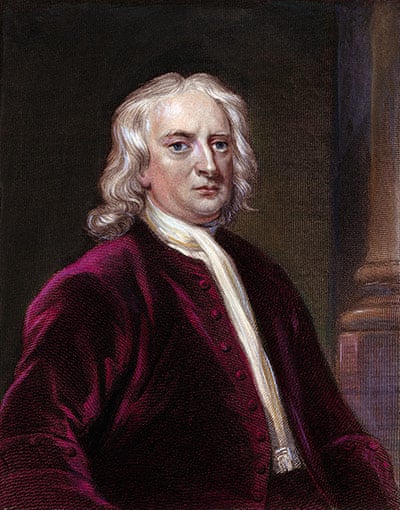
Isaac NewtonCo-inventor of calculus, a major contributor to the science of optics and a gifted mathematician, Isaac Newton (1643-1727), who was born in Lincolnshire, outlined the laws of mechanics that now underpin vast swaths of classical physics. Most important of all, Newton outlined theprinciple of gravity, which explained how the planets revolve round the sun. During his life, he was showered with honours, including the presidency of the Royal Society. He is renowned as a supreme rationalist, though he actually wrote more about alchemy and religion, including a 300,000-word treatise that attempted to prove the pope was really the Antichrist and an “apocalyptic whore”.
**********************************************************************************************************************************
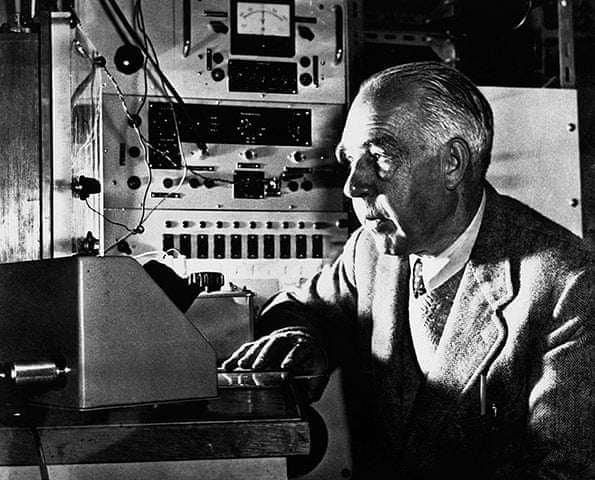
Niels BohrBorn in Copenhagen, Bohr (1885-1962) developed the modern idea of an atom, which has a nucleus at the centre with electrons revolving round it. When electrons move from one energy level to another, they emit discrete quanta of energy. The work won Bohr a Nobel prize in 1922. For his achievements, Carlsberg brewery gave Bohr a special gift: a house with a pipeline connected to its brewery next door, thus providing him with free beer for life. In 1954, Bohr helped establish Cern, the European particle physics facility. In 1975, his son, Aage, won a Nobel for research on atomic nuclei.
**********************************************************************************************************************************
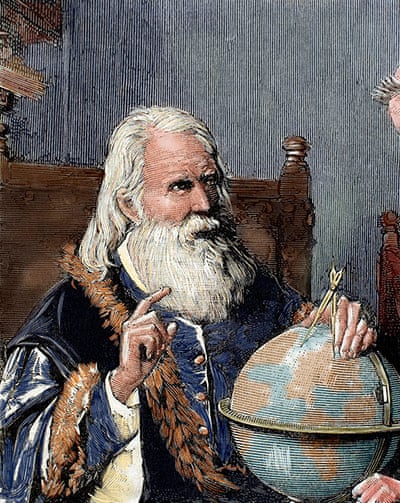
Galileo GalileiBorn in Pisa, Galileo (1564-1642) initially trained as a doctor. On hearing of the invention of the telescope in 1609, he built his own and turned it to the heavens, revealing the existence of sunspots and a pitted, mountainous surface on the moon: the heavens were not incorruptible. His studies also provided support for the idea that the Earth revolves round the sun. This got Galileo into considerable trouble with the Catholic church and he was forced to abandon that backing in 1633. His work on falling bodies also laid the groundwork for Newton’s subsequent theories.
**********************************************************************************************************************************
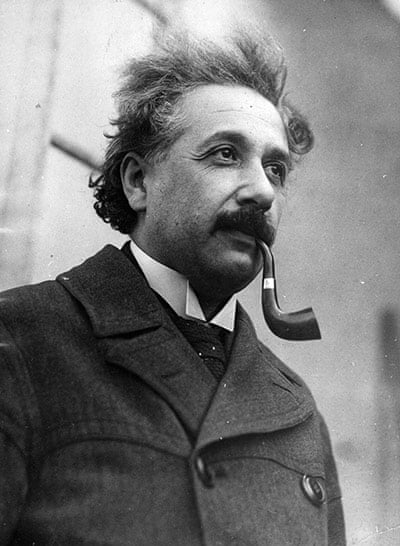
Albert EinsteinThree great theories define our physical knowledge of the universe: relativity, quantum mechanics and gravitation. The first is the handiwork of German-born Albert Einstein (1879-1955), who remains the physicist with the greatest reputation for originality of thought. His work showed that space and time are not immutable but are fluid and malleable. Einstein, who took US citizenship in 1940, also provided the world with its most famous equation, E=mc2, which demonstrates the equivalence of mass and energy. His name has become synonymous with the idea of genius and he died a celebrity. He was awarded the 1921 Nobel prize for physics.
**********************************************************************************************************************************
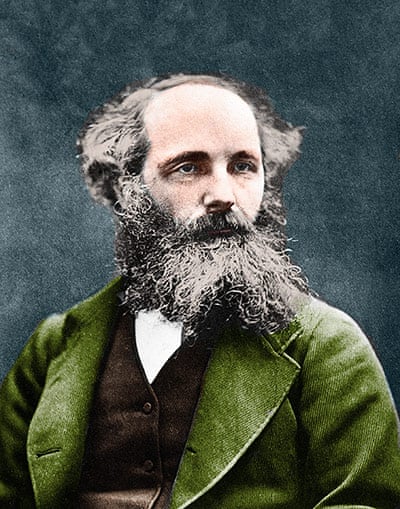
James Clerk MaxwellIn contrast to Newton and Einstein, Edinburgh-born Maxwell (1831-79) is virtually unknown to the general public. Yet his contribution to physics was every bit as significant, particularly his discovery of the theory of electromagnetism. This showed that electricity, magnetism and light are all manifestations of the same phenomenon, the electromagnetic field. The development of radio, TV and radar were the direct consequences. Maxwell also carried out pioneering work in optics and colour vision. However, in his later years, his God-fearing Scottish upbringing brought him into dispute with the evolutionary thinking of Darwin and others and he wrote papers denouncing natural selection.
**********************************************************************************************************************************
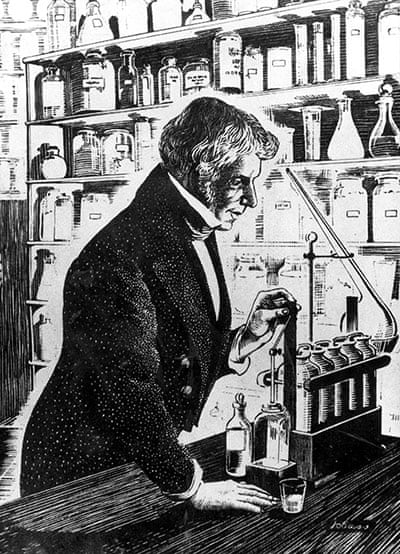
Michael FaradayLargely self-educated, Faraday (1791-1867) became one of the greatest scientists of his day thanks to the patronage of the eminent English chemist Humphry Davy, who hired him as an assistant in 1813. Faraday went on to establish the idea of the electromagnetic field and discovered electromagnetic induction and the laws of electrolysis. His electromagnetic devices formed the foundation of electric motor technology. He twice rejected offers of a knighthood and when asked to advise on chemical weapons for the Crimean war effort, refused on ethical grounds. Einstein kept a picture of Faraday on his study wall (alongside pictures of Newton and Maxwell).
**********************************************************************************************************************************
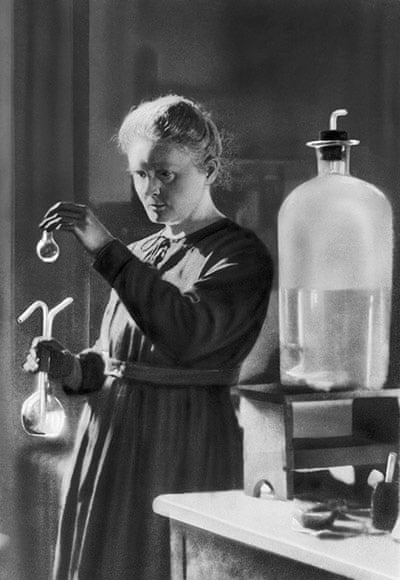
Marie CurieThe first woman to win a Nobel and the first person to win two separate Nobels, Curie (1867-1934) was born in Poland and won her first Nobel in 1903 with husband, Pierre, for discovering radioactivity. However, she was not allowed to participate in the keynote lecture winners give because she was a woman. After Pierre died in a road accident in 1906, she won her second Nobel in 1911 for discovering radium, though an attempt was made to rescind it when news emerged of her affair with married colleague Paul Langevin. After collecting the prize, Curie was pilloried by the French press. Langevin was ignored.
**********************************************************************************************************************************
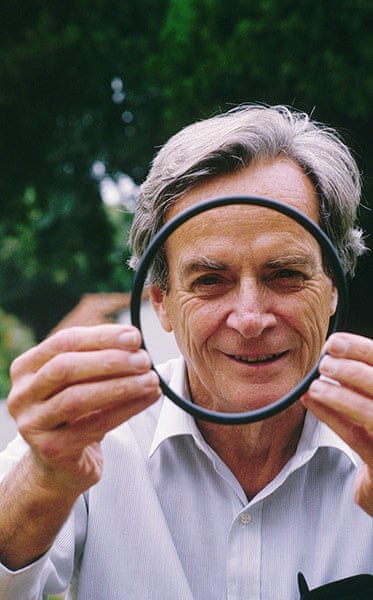
Richard FeynmanOne of the 20th century’s most influential and colourful physicists, Feynman (1918-88) played a key role in the development of quantum electrodynamics, the theory that describes how light and matter interact, earning him a Nobel prize in 1965. Feynman also contributed to the fields of quantum computing and nanotechnology and was a member of the Rogers Commission that lambasted Nasa over the destruction of space shuttle Challenger in 1986. He was a keen drummer, experimented with drugs and often worked on physics problems in topless bars because he said they helped him concentrate. Feynman died in 1988, aged 69.
**********************************************************************************************************************************
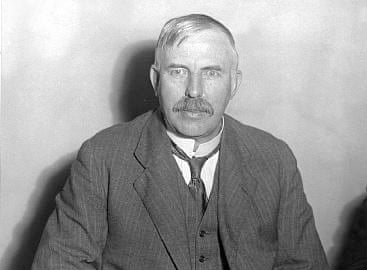
Ernest RutherfordNew Zealand-born Rutherford (1871-1937) is considered one of the greatest of all experimental physicists. He discovered the idea of radioactive half-life and showed that radioactivity involved the transmutation of one chemical element to another. He was awarded a Nobel in 1908 “for his investigations into the disintegration of the elements”. Rutherford later became director of the Cavendish Laboratory at Cambridge University where, under his leadership, the neutron was discovered by James Chadwick in 1932 and the first experiment to split the nucleus was carried out by John Cockcroft and Ernest Walton. The element rutherfordium was named after him in 1997.
**********************************************************************************************************************************
Paul DiracOne of the most revered – and strangest – figures in physics. The son of a Swiss father and English mother, Dirac (1902-84) was born in Bristol. He predicted the existence of antimatter, created some of quantum mechanics’ key equations and laid the foundations for today’s micro-electronics industry. Dirac won a Nobel in 1933 but remained “an Edwardian geek”, according tobiographer Graham Farmelo. He turned down a knighthood because he didn’t want people using his first name, while his daughter, Monica, never once remembered him laughing. “This balancing on the dizzying path between genius and madness is awful,” Einstein said of him.

source:http://www.theguardian.com/culture/gallery/2013/may/12/the-10-best-physicists
Sivar A.Baiz Hawler@Kurdistan 8-9-2015
Technology& Science in Golden Ages
Technology&
Science in Golden Ages
A significant number of inventions were produced by medieval Muslim
engineers and inventors, such as Abbas Ibn Firnas, the Banū Mūsā,
Taqi al-Din, and most notably al-Jazari.
Some of the inventions journalist Paul Vallely has stated to
have come from the Islamic Golden Age include the camera obscura, coffee, soap
bar, tooth paste, shampoo, distilledalcohol, uric acid, nitric acid, alembic,
valve, reciprocating suction piston pump, mechanized waterclocks, quilting,
surgical catgut, vertical-axle windmill, inoculation, cryptanalysis,frequency
analysis, three-course meal, stained glass and quartz glass, Persian carpet,
and celestial globe.
 For
science ,arly scientific methods were developed in the Islamic world, where
significant progress in methodology was made, especially in the works of Ibn
al-Haytham (Alhazen) in the 11th century, who is considered a pioneer of
experimental physics, which some place in the experimental tradition of
Ptolemy. Others see his use of experimentation and quantification to
distinguish between competing scientific theories as an innovation in
scientific method. Ibn al-Haytham (Alhazen) wrote the Book of Optics, in which
he significantly reformed the field of optics, empirically proved that vision
occurred because of light rays entering the eye, and invented the camera
obscura to demonstrate the physical nature of light rays.
For
science ,arly scientific methods were developed in the Islamic world, where
significant progress in methodology was made, especially in the works of Ibn
al-Haytham (Alhazen) in the 11th century, who is considered a pioneer of
experimental physics, which some place in the experimental tradition of
Ptolemy. Others see his use of experimentation and quantification to
distinguish between competing scientific theories as an innovation in
scientific method. Ibn al-Haytham (Alhazen) wrote the Book of Optics, in which
he significantly reformed the field of optics, empirically proved that vision
occurred because of light rays entering the eye, and invented the camera
obscura to demonstrate the physical nature of light rays.
Ibn al-Haytham has also been described as the “first scientist”
for his development of the scientific method, and his pioneering work on the
psychology of visual perception is considered a precursor to psychophysics and
experimental psychology although this is still the matter of debate.

source:http://islamichistory.org
Edited and Published by Sivar Aziz Hawler(26-5-2015)
Physics in Golden Ages
Physics in Golden Ages

A page of Ibn Sahl’s manuscript showing his discovery of the law
of refraction (Snell’s law).
The study of experimental physics began with Ibn al-Haytham, a pioneer of modern optics, who introduced the experimental scientific method and used it to drastically transform the understanding of light and vision in his Book of Optics, which has been ranked alongside Isaac Newton’s Philosophiae Naturalis Principia Mathematica as one of the most influential books in the history of physics, for initiating a scientific revolution in optics and visual perception.
The study of experimental physics began with Ibn al-Haytham, a pioneer of modern optics, who introduced the experimental scientific method and used it to drastically transform the understanding of light and vision in his Book of Optics, which has been ranked alongside Isaac Newton’s Philosophiae Naturalis Principia Mathematica as one of the most influential books in the history of physics, for initiating a scientific revolution in optics and visual perception.
The experimental scientific method was soon introduced into
mechanics by Biruni, and early precursors to Newton’s laws of motion were
discovered by several Muslim scientists. The law of inertia, known as Newton’s
first law of motion, and the concept of momentum were discovered by Ibn
al-Haytham (Alhacen) and Avicenna. The proportionality between forceand
acceleration, considered “the fundamental law of classical mechanics” and foreshadowing
Newton’s second law of motion, was discovered by Hibat Allah Abu’l-Barakat
al-Baghdaadi, while the concept of reaction, foreshadowing Newton’s third law
of motion, was discovered by Ibn Bajjah (Avempace).

Theories foreshadowing Newton’s law of universal gravitation
were developed by Ja’far Muhammad ibn Mūsā ibn Shākir, Ibn al-Haytham, and
al-Khazini. Galileo Galilei’s mathematical treatment of acceleration and his
concept ofimpetus was enriched by the commentaries of Avicenna and Ibn Bajjah
to Aristotle’s Physics as well as the Neoplatonic tradition of Alexandria,
represented by John Philoponus.
Cosmic Calendar

Sivar.A (Hawler@kuristan) 5-4-2015
Cosmic calendar is one of the ways of explaining and understanding history of
universe, whole universe’s age in this calendar (13.7 billion )years is
calculated as a year ,a day is like 37.8 million years , a minute is equivalent
to 1.58 million years and a second is 438 years. According to this calendar
(BIG BANG) event happened at (1th) January’s midnight and the current time is 31th
December’s mid night .
This concept was
popularized by Carl Sagan in his book “The Dragons of Eden” and on his television series Cosmos. In
the 2014 sequel series, Cosmos: A( Space
time Odyssey), host ” Neil deGrasse Tyson” presents the same concept of a Cosmic Calendar, but
using the revised age of the Universe of 13.8 billion years as an improvement
on Sagan's 1980 figure of 15 billion years. Sagan goes on to extend the
comparison in terms of surface area, explaining that if the Cosmic Calendar is
scaled to the size of a football field, then "all of human history would
occupy(1) an area the size of [his] hand", here are some event according to this calendar in past:
Big Bang
Date
|
Event
|
|
1 Jan
|
13.8
|
Big Bang, as seen through
cosmic background radiation
|
15 Mar
|
11
|
Milky Way Galaxy formed
|
31 Aug
|
4.57
|
Sun formed
(planets and Earth's moon soon thereafter)
|
16 Sep
|
4.0
|
note:
1/occupy: to fill, exist in, or use a place or period of time
Big Bang: first explosion which
caused exist of life according to stephen hawkings theory
“ONE OF THE GREATEST”

Al-Jazari invented “Robotics”, “Elephant
Clock”, “Sand Casting”, “Lamination”, “Paper
Model”, “Flush Toilet”
Al-Jazari was an
Arab Muslim researcher and polymath(1) who lived during the Islamic Golden Age. He was
born in 1136 CE in Jazirat ibn Umar
city(which is now the south-eastern frontier of Turkey), which is what gives
him the title of “Al-Jazari”. He
was a man of many talents other than being a famous researcher, he was also a
skilled inventor, artist, craftsman(2) and
engineer. We don’t know much about his life, other than the details he provides
in his own books. He followed in the footsteps of his father and held the post of chief engineer
at the king’s palace.
Al-Jazari was an
artisan and was mostly interested in the functional aspect of things which
makes him more of an engineer than an inventor. A brilliant mechanical
engineer, and built lots of clever strange and interesting devices . His strange
and interesting devices were always elaborate(3) and ornate(4) . He designed more than 50 different
types of devices including clocks, fountains, hand washing devices, musical
devices, machines for raising water etc. His most famous book, titled “The Book
of Knowledge of Ingenious Mechanical Devices” was written in 1206 and presented
to the Sultan as a gift. In it, he designed and described over a 100 mechanical
devices.
In his books, Al-Jazari gave step by step
instructions about how to build any of the machines and devices described within.
His books are an invaluable store of knowledge about early Muslim engineering.
They were unique(5) and successful because unlike other authors, he
had minutely described each detail of his machines and were so well organized the
instructions that many future craftsmen were able to enjoy the benefits of his
skill. One of the most valuable things that he created was a water system for
supplying water to various parts of the city.
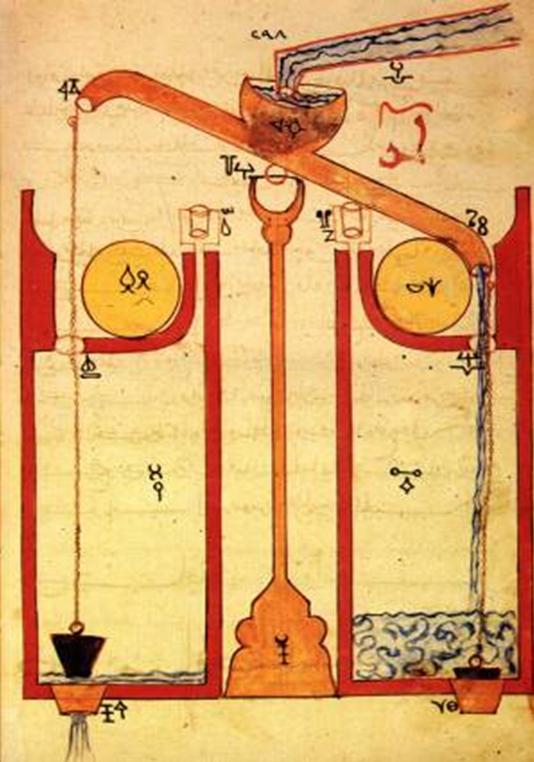
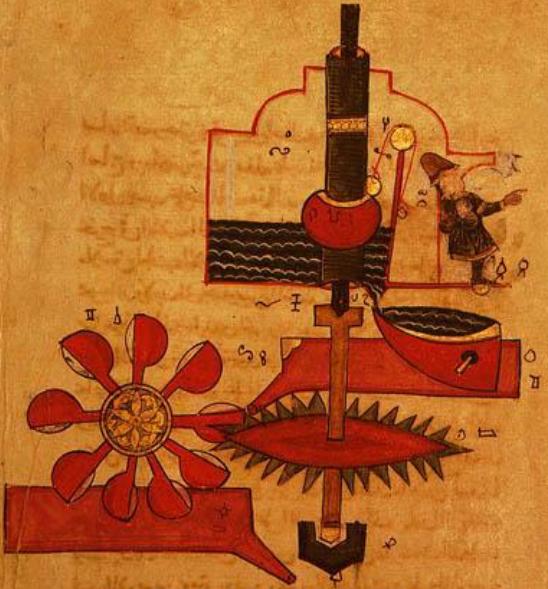
It was operated by hydropower, by taking water from
the lake and turning a scoop wheel with a system of gears to transport water up
the water channel and into mosques and hospitals. In all, Al-Jazari invented
five machines for raising water, along with various watermills and water
wheels.
. He also built other
devices include a musical robot band that would float on water and play
instruments to amuse guests and several different types of clocks including
candle clocks, elephant clocks, castle clocks etc.

The ingenuity and skill demonstrated in his
craft is widely respected till today, and he is remembered worldwide as a
dynamic and talented craftsman and engineer
1/polymath= a person
who knows a lot about many different subjects .
2/craftsman= a person
who is skilled in a particular 3/elaborate =to add
more information to or explain something that you have said
4/ornate= having a lot of complicated decoration
5/unique=one of kind, special between lots.
Subscribe to:
Posts
(
Atom
)